
:::
Forums
Patrick Flores
Convener of Forums
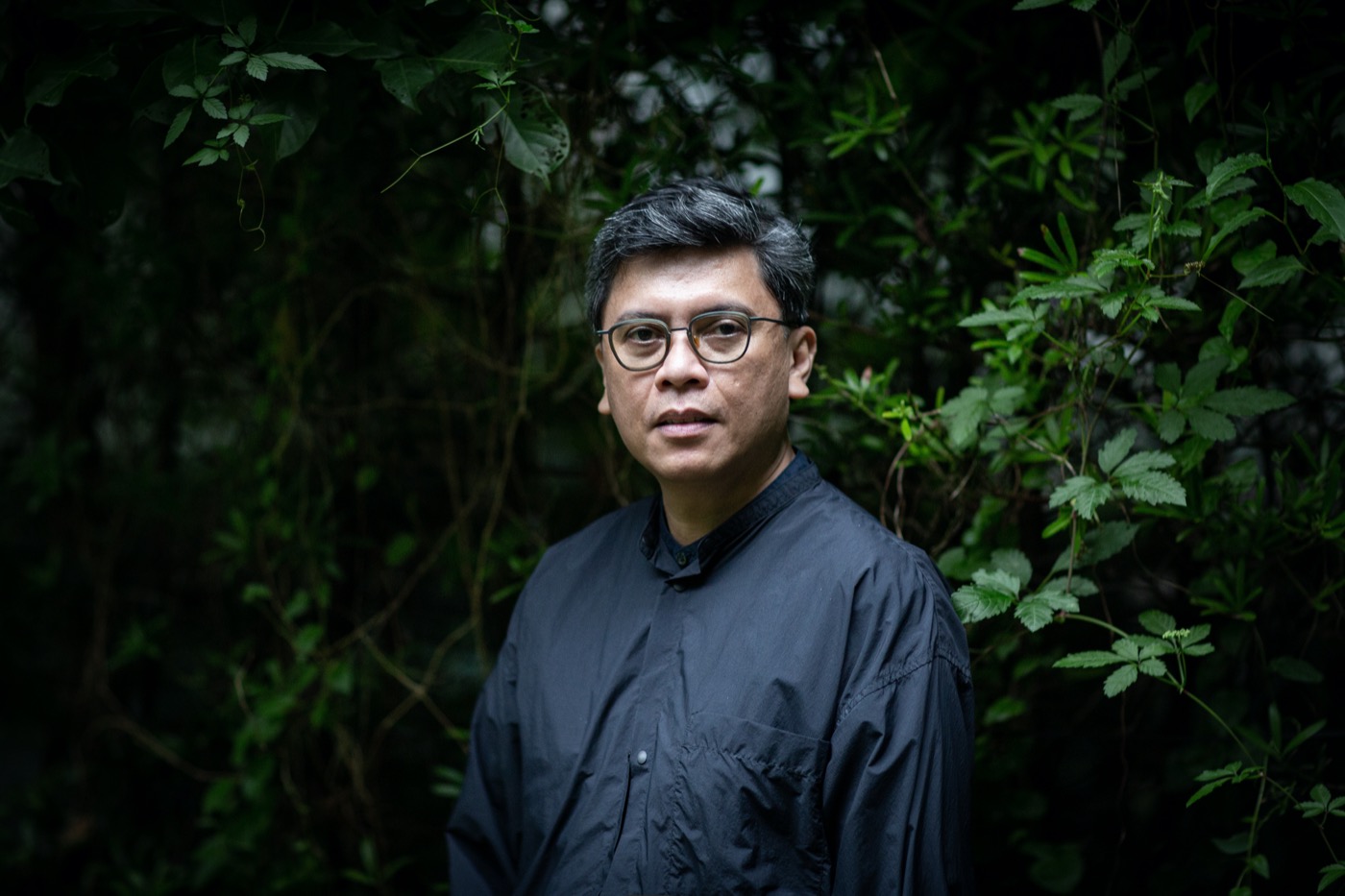
Patrick Flores is Professor of Art Studies at the Department of Art Studies at the University of the Philippines and Curator of the Vargas Museum in Manila. He is the Director of the Philippine Contemporary Art Network. He was one of the curators of Under Construction: New Dimensions of Asian Art in 2001-2003 and the Gwangju Biennale (Position Papers) in 2008. He was a Visiting Fellow at the National Gallery of Art in Washington, D.C. in 1999. Among his publications are Painting History: Revisions in Philippine Colonial Art (1999); Past Peripheral: Curation in Southeast Asia (2008); Art After War: 1948-1969 (2015); and Raymundo Albano: Texts (2017). He was a Guest Scholar of the Getty Research Institute in Los Angeles in 2014, and he was the Artistic Director of Singapore Biennale 2019.

A forum is a seminar, a term that refers to a conference, a meeting of minds and bodies. From the word seminarium, it is a breeding ground, a nursery, an arboretum. It is a potential ecology. The French thinker and writer Roland Barthes argues in the essay “To the Seminar” that the “seminar’s work is the production of differences.” Barthes clarifies that “difference is not conflict…each relation, gradually (it takes time), is made original: discovers the originality of bodies taken one by one, breaks off the reproduction of roles, the repetition of discourses, counters any staging of prestige, of rivalry.”1 In his imagination, the seminar is both productive and differential and cannot be reduced to a marketplace of diverse ideas or an arena of competition. The seminar is a chance to recover an origin, an indigenous address. It resists the capture of reproduction and repetition, and the acquisition of status and privilege. He goes on to say that “in the seminar…all teaching is foreclosed: no knowledge is transmitted (but a knowledge can be created), no discourse is sustained (but a text is sought): teaching is disappointed. Either someone works, seeks, produces, gathers, writes in the others’ presence; or else all incite each other, call to each other, put into circulation the object to be produced, the procedure to compose, which thus passes from hand to hand, suspended from the thread of desire.”2 The pedagogy of the seminar mediates efforts to ensconce hierarchies and masters and their monopolies; instead, it encourages co-presence, refuses mastery, and releases teaching from the fixities of and fixations on fully formed knowledge only waiting to be proffered. Again: teaching is disappointed.
There is openness and open-ended-ness in the methods of the seminar. But the ethos is urgent and punctual, even as the consequences of ethical desire may be infinite. In Athenian democracy, the deliberative promise of a gathering partly stems from krisis, a tear in the polity that prompts the convening of an assembly, which in a way is a seminar. The theorist Wendy Brown annotates that “critique is an old term that derives from the Greek word krisis.”3 She continues that for the Greeks, krisis was a jurisprudential term identified with the art of making distinction, an art considered essential to judging and rectifying an alleged disorder in or of democracy.” The process involves “sifting and sorting…focused on distinguishing the true from the false, the genuine from the spurious, the beautiful from the ugly, the right from the wrong…Krisis thus comes close to what we would call today deliberation.” Beyond Antiquity, the word critique and criticism drifted away from crisis and only retained the connection to the field of medicine, which is quite pertinent at this moment of the pandemic. The idea of a critical condition speaks of an emergency, specifically “the crucial stage of a disease in which a decision had to be made but had not yet been reached…indicating that accurate diagnosis and judgments about appropriate interventions potentially stand between life and death. A critical condition is thus a particular kind of call: an urgent call for knowledge, deliberation judgment, and action to stave off catastrophe.” This theorization on crisis and critique is instructive as it enables us to think of the ways in which a “worldly event or phenomenon, whether a collapsed empire or a diseased body, connects a specific condition with an immediate need to comprehend by sifting, soring, or separating its elements, to judge, and to respond to it.”4 What is vital is also what is critical.
The series of forums for the Taiwan Exhibition is in dynamic conversation with the previous participations of Taiwan in the Venice Biennale. This exhibition becomes an archive, a space for historical memory to be activated. As well, it is decisively positioned to dialogue with both immediate, deep-seated, and far-reaching issues. The study of objects, therefore, is a symptom of this history and memory that intersects with the symptoms generated by the various gestures the Taiwan Exhibition has over the years performed in an array of media, from painting to installation. Archive and forum create a reciprocal exchange of discourse and sensing, of thoughtful excitement through an exhibition and a colloquium.
This interplay between archive and forum speaks to the two concepts evoked by the title of the Taiwan Exhibition. In the phrase Impossible Dreams, two aspirations seem to move away from actuality and achievement. The gap created by this preconception of the words impossible and dreams is addressed by the Taiwan Exhibition through a reconsideration of what the impossible and dreams mean. Surely, the formulation of what is palpable in actual terms and what regulates in the form of an abstract ideal needs to be liberated from the binary.
The forum and krisis, therefore, co-habit the time and space of the Taiwan Exhibition, which is somewhere between the institution (the Taipei Fine Arts Museum), which is invested with the power to commission, and the contemporary work of art and the curatorial, which cannot be conflated with the prerogatives of the museum in Taiwan and the biennale in Venice. This is why the concept of the pavilion is instructive, it enables the artist and the curator to move across scales and not be tied to structures and their attendant orthodoxies and complicities. That said, the decisions of the artist and curator are not totally autonomous from the authority of the structures and, in fact, can be limited, even rendered inconsequential or inarticulate, at certain times.
What is important to stress at this point is the (con)temporariness of this Taiwan Exhibition, as well as the precarity of the concept in relation to Taiwan, which is not regarded as a nation-state and so appropriates the pavilion modality in an idiosyncratic, if not daring, way. The Taiwan Exhibition changes every two years, with different artists and curators intervening to remediate it and contribute to the discourse of the Biennale around it. The Biennale in turn undergoes shifts every two years, too, remade and refunctioned by changing curatorial and artistic intelligences. This whirl of coming and going keeps the Taiwan Exhibition restless.
It must be noted that there are other pavilions surrounding the Taiwan Exhibition of the nation-state, and they similarly mutate regularly. It is this anticipation of changes that lets the Taiwan Exhibition offer a unique temporality and therefore materialize the situation of impossibility. In other words, this temporality resists the stasis of the accumulation of the Biennale’s symbolic capital and the habitus of its practitioners. The feminist theorist Drucilla Cornell, meditating on Derrida’s theory of the impossible, states that time or temporality “keeps open the ‘not yet,’ but as part of experience. There is never any reason— there can’t be— in this real world of ours, for us to give up on our emancipatory desire.”5 Cornell elaborates that “temporality means that the very categories of immanence and transcendence are shaken up, because there is no concept of the here-and-now. When time is out of joint, the dislocale of the emancipatory desire, meaning its impossibility of ever being located, is infinite possibility.”6 The time of the Taiwan Exhibition, through the forum and the archive, consists of many layers, which may be sharp or fuzzy, but always in a state of emergence, evoked by whatever “present” speaks to it, or troubles and thrills it.
Finally, that the Taiwan Exhibition figures in the scene as a virtual seminar and an archive-exhibition bears the aspect of an elusive proposition in a time of internal and all-over crisis. The latter has precipitated this kind of calibration and will most likely haunt the narrative of the Taiwan Exhibition in the years to come. This haunting is to be accepted as a necessary insistence on both history and the future through the work of memory. The Taiwan Exhibition as an exhibition and seminar hosts this memory, the crisis that makes it impossible and therefore persistently present.
