
The 46th International Art Exhibition Venice Biennale
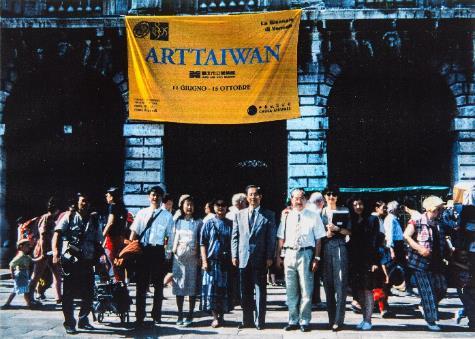
In 1995, the Taiwan Exhibition first participated in the Venice Biennale with the theme “Art Taiwan”. The production team photographed at the entrance of the Palazzo delle Prigioni.
The Venice Biennale celebrated its centenary. The French curator Jean Clair was its first foreign artistic director, and the exhibition theme was “Identity and Alterity”. Clair’s cancellation of the Aperto show that had showcased numerous new artists since 1980 was met with much criticism. South Korea was the last country to qualify for a national pavilion at the Giardini.
Taiwan participated for the first time with a national pavilion under the name “Republic of China on Taiwan”, hiring the Palazzo delle Prigioni near the Palazzo Ducale on the Piazza San Marco as the venue. Under the theme of “Art Taiwan”, the exhibition featured Lien Te-Cheng, Huang Chin-Ho, Wu Mali, Hou Chun-Ming, and Huang Chih-Yang.
The 48th International Art Exhibition Venice Biennale
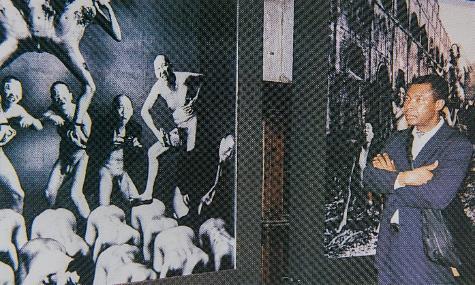
Internationally renowned curator Okwui Enwezor visited the exhibition of the Taiwan Exhibition at the 48th Venice Biennale
The independent Swiss curator Harald Szeemann was the artistic director. Under the theme and curatorial concept “APERTO Over All”, it invited a large number of young and women artists, highlighting the forward-looking approach of the Venice Biennale at the turn of the century. The Arsenale was officially designated as an exhibition venue from this edition.
For the first time in the history of the Taiwan Exhibition, the curator J.J. Shih was selected through a call for submissions. Under the theme “Close to Open: Taiwanese Artists Exposed”, it showcased the work of Huang Buh-Ching, Chen Chieh-Jen and Hung Tung-Lu.
The 49th International Art Exhibition Venice Biennale
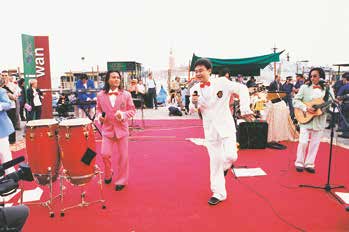
Opening performance by the New Formosa Band
Harald Szeemann was the artistic director of the exhibition under the theme “Plateau of Mankind”. Taiwanese curator Manray Hsu was a member of the biennial jury.
Curated by Kao Chien-Hui, the Taiwan Exhibition “Living Cell” showcased the works of five artists, including Wang Wen-Chi, Lin Shu-Min, Michael Lin, Chang Chien-Chi and Liu Shih-Fen. The Taiwanese pop music group New Formosa Band performed at the opening ceremony.
The 50th International Art Exhibition Venice Biennale
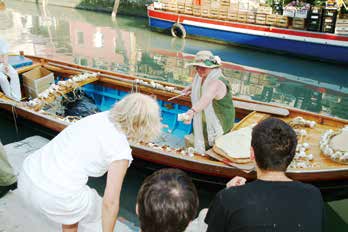
Shu Lea Cheang. Garlic=Rich Air. Performance, 2003
The Italian curator Francesco Bonami was the artistic director and the exhibition theme was “Dreams and Conflicts: The Dictatorship of the Viewer”. Bonami invited eleven curators and artists to co-curate ten sub-exhibitions under the main theme. Due to the impact of the SARS epidemic, the Chinese Pavilion participating for the first time cancelled its exhibition.
The organizer created the “Extra 50” collateral exhibitions, accepting applications from art institutions of different countries to join. From this edition, Taiwan no longer participates under the name “Taiwan, R.O.C.”. Instead, with the Taipei Fine Arts Museum as organizer, the Taiwan Exhibition was listed among the “Extra 50” exhibitions, which became known as Collateral Events from 2005.
The Taiwan Exhibition was curated by Lin Shu-Min and the curatorial theme was “TAIWAN – Limbo Zone”. It featured the artists Daniel Lee, Lee Ming-Wei, Shu Lea Cheang and Yuan Goang-Ming. Shu Lea Cheang showed her “Garlic = Rich Air” series both at the main exhibition in the Arsenale and at the Taiwan Exhibition. In the form of performance art, she traded garlic in Venice as an outdoor event of the Taiwan Exhibition.
The 51th International Art Exhibition Venice Biennale
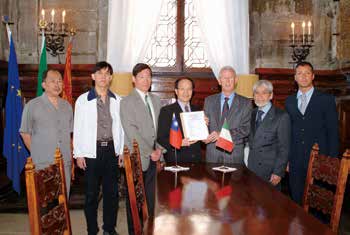
Chen Chi-Nan(fourth left), Chairman of the Council for Cultural Affairs (the antecedent of the Ministry of Culture), signed a four year “Agreement for the Hiring of the Palazzo delle Prigioni” with Domenico Falconera (third right), president of the Circolo Artistico in Venezia which managed the Palazzo delle Prigioni.
This was co-directed by the two Spanish curators María de Corral and Rosa Martínez. It was the first time that two women had co-directed the Venice Biennale. They created the two different yet complementary exhibitions “The Experience of Art” and “Always a Little Further” respectively. Taiwanese artist Chen Chieh-Jen was invited to participate in “The Experience of Art”.
Curated by Chia Chi Jason Wang under the theme “The Spectre of Freedom”, the Taiwan Exhibition featured the works of the four artists including Kao Chung-Li, Tsui Kuang-Yu, Eva Lin Hsin-I and Kuo I-Chen.
Since 2004, the National Taiwan Museum of Fine Arts has participated in the Venice Biennale International Architecture Exhibition. To secure the right of use of the venue, Chen Chi-Nan, Chairman of the Council for Cultural Affairs (now Ministry of Culture), signed a four year “Agreement for the Hiring of the Palazzo delle Prigioni” with Domenico Falconera, president of the Circolo Artistico in Venezia which managed the Palazzo delle Prigioni.
The 52th International Art Exhibition Venice Biennale
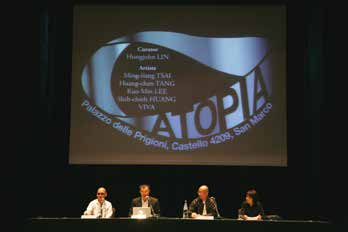
The curator attended the introduction of the “Atopia” exhibition of the Taiwan Exhibition by the organizers of the Venice Biennale.
The American curator Robert Storr was the artistic director and the theme was “Think with the Senses - Feel with the Mind. Art in the Present Tense”. He was the first American to serve as artistic director of the Venice Biennale.
Curated by Hongjong Lin, the Taiwan Exhibition “Atopia” featured the works of five artists including Tsai Ming-Liang, Tang Huang-Chen, Lee Kuo-Min, Huang Shih-Chieh and VIVA.
The 55th International Art Exhibition Venice Biennale

Kateřina Šedá+BATEŽO MIKILU
This is not a Czech Pavilion
Action, installation, performance, digital documentation, and communication, 2013
The Italian Massimiliano Gioni was the artistic director and the theme was “The Encyclopedic Palace”. Angola, which was participating for the first time, won the Golden Lion for Best National Participation. It was also the first African country to have won since the inauguration of the Venice Biennale. Germany and France swapped their pavilions, while Singapore withdrew from this edition due to “reassessment of the necessity of long-term participation”.
Curator Esther Lu curated “This is Not a Taiwan Pavilion”, inviting three groups of artists to participate, including Bernd Behr, Hsu Chia-Wei and Kateřina Šedá + BATEŽO MIKILU. It sparked a controversy over the nationalities of the artists.
An “Open Futures: Young Curator Workshop” satellite event was held, inviting viewers interested in exhibition production to imagine and engage in curatorial practices through a two-day workshop.
The 57th International Art Exhibition Venice Biennale
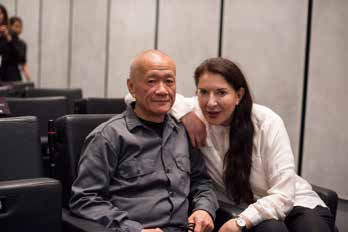
Tehching Hsieh and Marina Abramovic
Photograph: © Hugo Glendinning
The French curator Christine Macel was the artistic director and the theme was “Viva Arte Vive”. The Taiwanese curator Amy Cheng was a member of the jury, while the Taiwanese artist Lee Ming-wei was invited to exhibit in the main exhibition.
The Taiwan Exhibition continued to adopt the format of the nomination of a single artist, and was represented by the performance artist Tehching Hsieh. In terms of the operation and planning of the Taiwan Exhibition, multiple experiments were carried out. The independent curator Adrian Heathfield was invited to curate the exhibition “Doing Time”. A professional exchange dinner gala for international guests and an “Art Administration Training Programme” offering docent internship positions and one curatorial internship position were first held. During the holding of ART BASEL in Hong Kong, a preview talk was held at the Hong Kong Arts Centre, while two other talks were held during the opening and closing of the exhibition. More intensive marketing strategies and resources were deployed. The number of visitors was the highest in the history of the Taiwan Exhibition, including distinguished guests such as Marina Abramović. The New York Times listed the exhibition among “The 10 Best Things we saw at the Venice Biennial”.
The 58th International Art Exhibition Venice Biennale
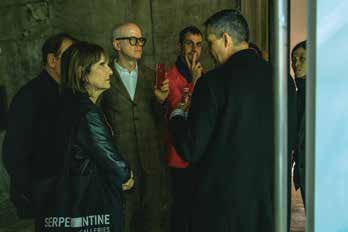
The internationally renowned curator Hans-Ulrich Obrist visited the exhibition of the Taiwan Exhibition at the 58th Venice Biennale.
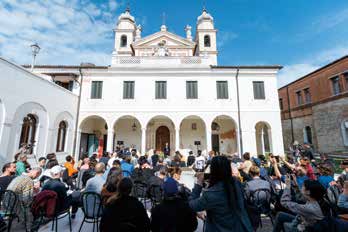
Public Program: The Failures of Electronic Discipline-A Symposium of Gender and Sexual Outlaws
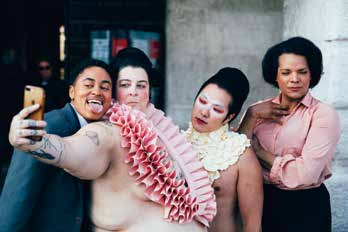
Performers of Public Program (from left: Khaleb Brooks as D X, Liz Rosenfeld as SADE X, Enrico Wey as CASANOVA X, Aérea Negrot as B X) / Photograph: Choy Tsai
The British curator Ralph Rugoff was the artistic director and the theme was “May You Live in Interesting Times”.
Curated by Paul B. Preciado, the Taiwan Exhibition presented the work “3×3×6” by Shu Lea Cheang. The artist put together a Taiwanese technical team to create an immersive installation on site. Technical staff hired through Venice and a Taiwanese remote mechanism controlled the surveillance system and ensured its smooth running during the term of the exhibition. The number of visitors at the preview was a historic high for the Taiwan Exhibition, which also attracted influential art professionals such as Hans Ulrich Obrist, artistic director at the Serpentine Galleries in the UK. As proposed by the curator, the public program of this edition were held on San Servolo. Multi-layered discourses were held on the exhibition theme in various lighthearted forms, such as reading, dialogue and performance. Digital Minister Audrey Tang attended remotely through a digital robot.
The 59th International Art Exhibition Venice Biennale
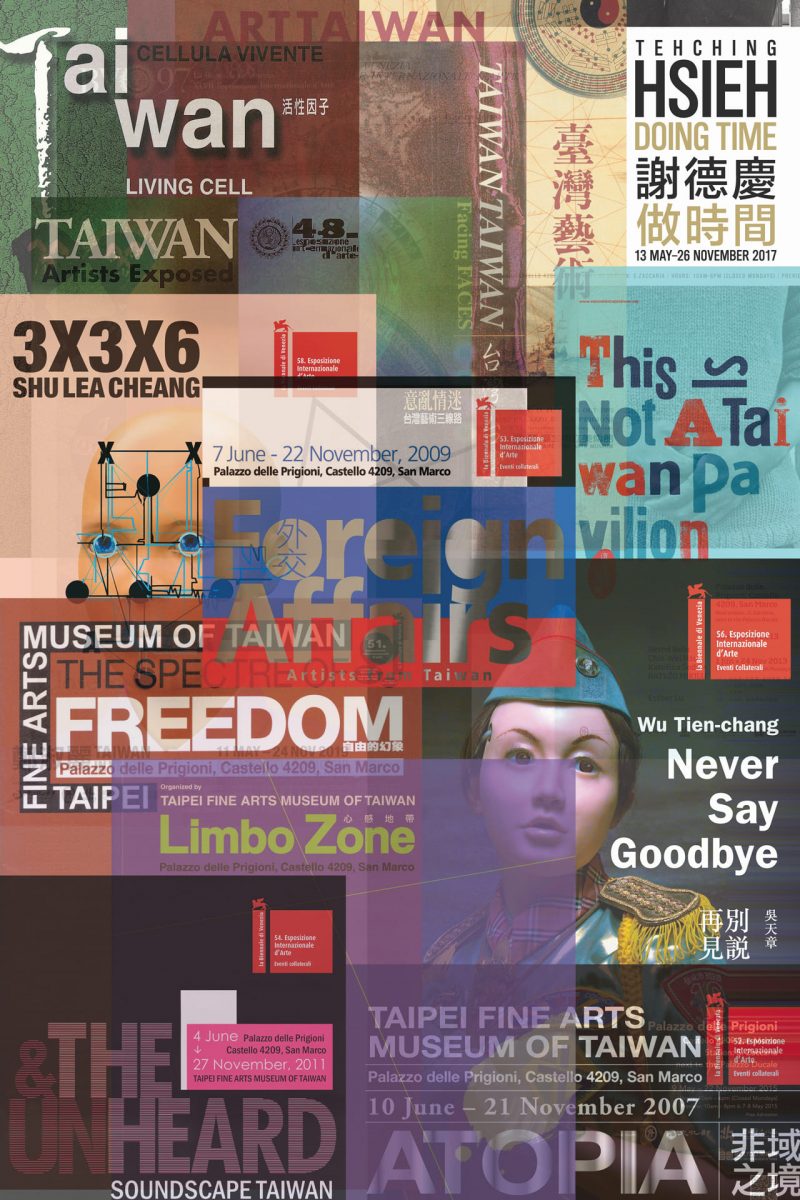
Taiwan Exhibitions, 1995–2019
Due to the impact of the Covid-19 pandemic, the 59th International Art Exhibition of the Venice Biennale originally slated for 2021 was postponed to 2022. From August 29 to December 8, 2021, the exhibition “The Disquieted Muses: When La Biennale di Venezia Meets History”, a historical retrospective on the 125th anniversary of the biennial, took place at the Giardini.
The Italian curator Cecilia Alemani is the artistic director, and the theme is “The Milk of Dreams”. This edition puts a particular spotlight on the works of women and gender nonconforming artists. NFT art will officially debut in this year’s Venice Biennale.
Russian Pavilion Curator and Artists pull out of Venice Biennale amid Russia’s war on Ukraine.
The artist Sakuliu Pavavaljung was to present “Kinerapan: Right of Crawling” for the Taiwan Exhibition, curated by the Philippine curator Patrick Flores. However, prior to the exhibition, Sakuliu’s qualification was terminated due to sexual offence allegations. The Taipei Fine Arts Museum resubmitted the proposal “Impossible Dreams” to the Biennale to hold a 27th anniversary historical retrospective of the Taiwan Exhibition as well as four thematic forums.